The Day Jake Got His License: A California Parent’s Realization
The day Jake passed his driving test felt like a victory for the Miller family in Encino. High fives all around. His mom, Sarah, even shed a tear – a mix of pride and pure, unadulterated fear. Her husband, Tom, mostly just saw dollar signs. They’d spent months teaching Jake to parallel park and navigate the maddening 405, but nothing prepared them for the true cost of adding a teenage driver to their auto insurance policy. The quote they got from their current insurer, a name like State Farm or AAA, made Tom choke on his coffee. It jumped something like 40% overnight.
But here’s the thing. That steep auto insurance premium, as painful as it feels, covers only so much. Most parents think, “Okay, we’re covered.” Not always. It’s a common misconception, especially here in California, where the stakes are often higher.
What Happens When “Enough” Isn’t Enough?
Imagine Jake, driving his hand-me-down sedan, heads out with a couple of friends to a Friday night football game at Birmingham High. Maybe he glances down at his phone for a second, or gets distracted by the chatter in the back seat. Perhaps another driver makes a boneheaded move. Suddenly, there’s a collision. It’s not a fender bender. Someone in the other car is seriously hurt. Maybe they need surgery, months of physical therapy, or can’t work for a long time.
Your primary auto insurance policy has limits – maybe $250,000 per person, $500,000 per accident. Sounds like a lot, right? In many parts of the country, it might be. But in California? With our high cost of living, expensive medical care, and a legal system that often favors those who are injured, that half-million can disappear fast. Like, really fast. A major spinal injury or a traumatic brain injury can easily blow past a million dollars in medical bills, lost wages, and pain and suffering.
So, what happens when the damages exceed your auto policy limits? The injured party’s lawyers don’t just shrug and walk away. Oh no. They look at your assets. Your home in the Valley, your savings account, your retirement funds, even your future earnings. That’s a terrifying thought for any parent. Especially when the accident involves your brand-new, inexperienced driver.
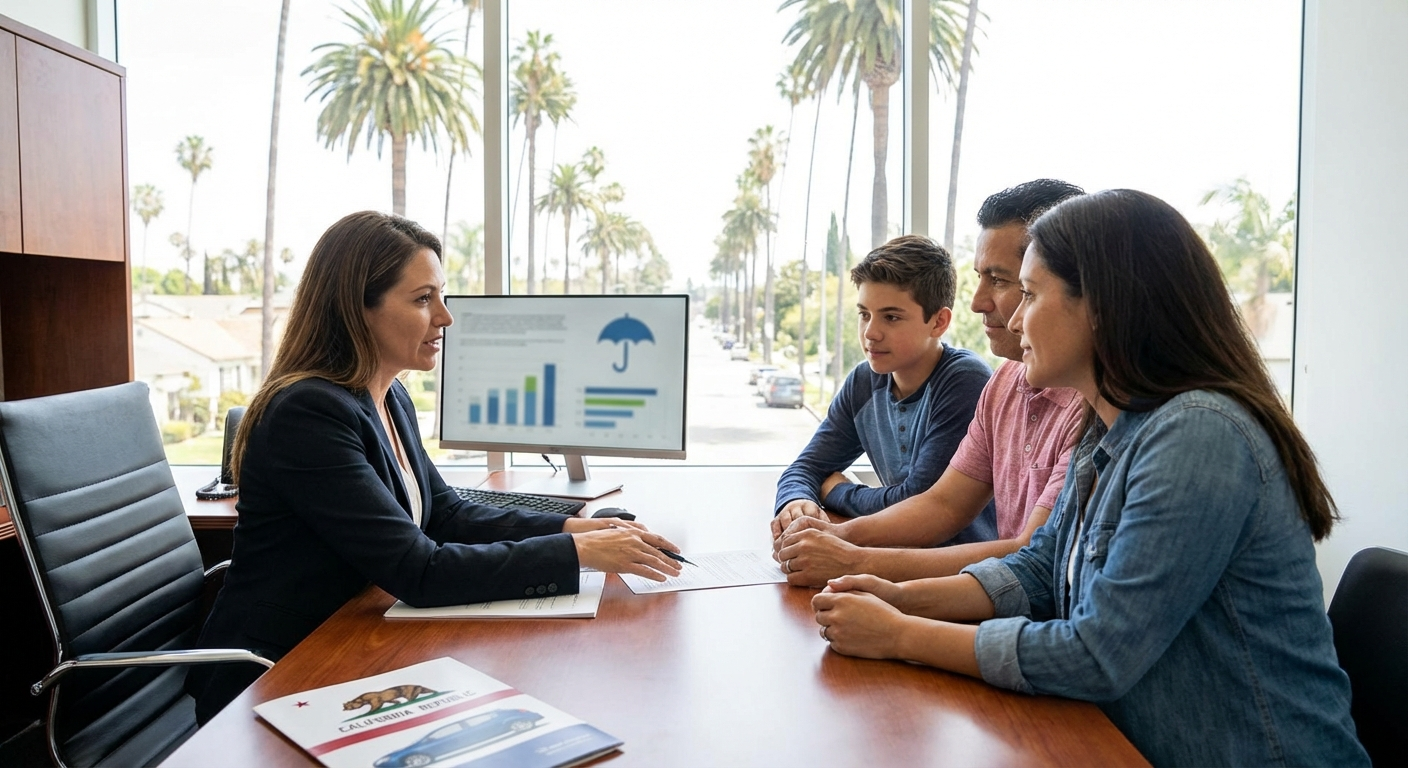
That’s Where Umbrella Insurance Comes In
Think of umbrella insurance as a giant, protective canopy that sits above your other insurance policies. It’s an extra layer of liability protection. It kicks in when the limits of your primary insurance – your auto, homeowners, or renters policy – are exhausted.
For the Millers, if Jake’s accident caused $1.5 million in damages, and their auto policy only paid out $500,000, that’s a $1 million gap. An umbrella policy, typically offering coverage in increments of $1 million or more, would step in to cover that remaining $1 million. Without it, that debt would fall squarely on Tom and Sarah Miller. They’d have to sell their house, drain their retirement. It’s a devastating scenario.
Many Californians have significant assets to protect. The equity in a home in Ventura County, a small business in the Inland Empire, investments built up over decades. All of it is exposed if you don’t have enough liability coverage.
Why Teen Drivers Make This So Urgent
Honestly, adding a teenage driver to your insurance is probably one of the biggest jumps in liability risk a family takes on. It’s not just about their inexperience. It’s about a few things:
* **Distraction:** Phones. Friends. Music. The world is a distraction for new drivers. Studies consistently show that texting or talking on a phone while driving increases accident risk exponentially.
* **Inexperience:** They just haven’t seen it all. They don’t have the instinct to react to a sudden lane change on the 101 or a slick patch of road after a light rain. They might follow too closely or misjudge speeds.
* **Peer Passengers:** When other teenagers are in the car, the risk of a fatal crash involving a teen driver goes up significantly. This isn’t just theory; it’s backed by mountains of data.
* **Higher Stakes:** A collision involving multiple people, especially if other teenagers are injured, can quickly escalate the financial damages.
You just can’t predict what a new driver will encounter on the road. And as much as we love our kids, they *are* a higher risk for insurers.
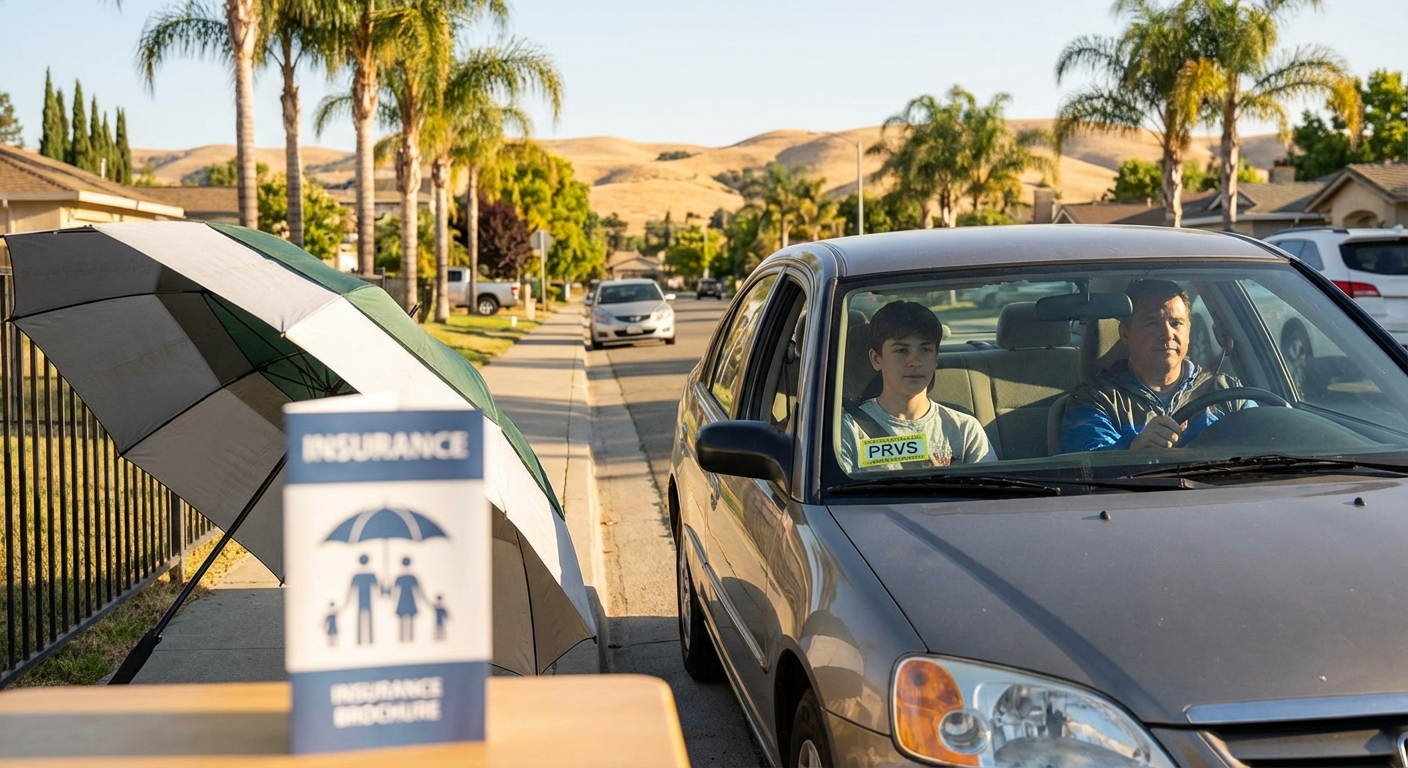
The California Angle: What You Need to Know
California isn’t just a place with beautiful beaches and endless traffic. It’s also a state with a particularly active legal environment. Lawsuits are common, and settlements can be substantial. Medical costs are among the highest in the nation. So, the potential for a catastrophic claim is very real.
Plus, our insurance market itself has seen some turbulence. We’ve had major wildfires – like the ones that are always a threat in the hills around Los Angeles or even the 2025 fire season projections – causing home insurance rates to skyrocket or even making coverage harder to get. While that’s for property, it reflects an overall higher-risk environment that can indirectly affect liability perspectives. Prop 103, while designed to protect consumers, has also made it challenging for insurers to adjust rates, which can lead to tighter underwriting standards.
All this means that if you’re ever in a position where you’re being sued for damages, the financial pressure can be immense.
How Much Umbrella Coverage Do You Need?
The short answer is: at least enough to cover your net worth. The real answer is more complicated. Many financial planners suggest having coverage equal to your assets plus your potential future earnings.
If the Millers own a home with $700,000 in equity, have $300,000 in investments, and a combined annual income of $200,000, they might consider a $2 million or even $3 million umbrella policy. Why? Because a lawsuit could target both their current assets and a portion of their future earnings.
The good news? Umbrella insurance is surprisingly affordable for the amount of protection it offers. Often, you can get a million dollars in coverage for just a few hundred dollars a year. That’s a small price to pay for genuine peace of mind, especially with a teenage driver out there.
Finding the Right Umbrella Policy
This isn’t really a DIY project. You need someone who understands the nuances of California insurance and can truly assess your family’s specific situation. Someone who has seen the devastating consequences when families *didn’t* have enough protection.
Karl Susman of Los Angeles Umbrella Insurance, CA License #OB75129, has helped countless California families protect their assets for years. He’s the kind of agent who knows the difference between a policy that just meets the minimums and one that genuinely protects your future. He understands the unique risks of California driving, especially with young drivers on the road.
If you’ve been putting off looking into umbrella insurance, or if you just added a teenage driver and that knot in your stomach hasn’t gone away, now’s the time.
Want to explore your options and get a quote for an umbrella policy that fits your family’s needs? It’s easier than you think. You can start the process right now: Get an Umbrella Insurance Quote.
What if My Teen Doesn’t Even Drive Much?
Even if your teenager only drives to school and back, or occasionally runs errands, the risk is still there. Accidents don’t care about mileage logs. And if they borrow a friend’s car, or a relative’s, your umbrella policy often still extends to cover them for liability, provided they have permission. It’s a broad safety net.
Can My Teenager Get Their Own Umbrella Policy?
Generally, no. Umbrella policies are usually written for the primary household and cover all members of that household, including teenage drivers. It’s part of your family’s overall financial protection strategy.
What Does an Umbrella Policy *Not* Cover?
It won’t cover your own injuries or property damage – that’s what health insurance and your primary auto/homeowners collision coverage are for. It doesn’t cover intentional criminal acts, or business-related liabilities (unless you have a specific commercial umbrella policy). It’s strictly about *your* liability to *others* when you’re at fault.
Considering the unpredictable nature of driving in California, especially for new drivers, it’s a small investment for substantial protection. Talking to an expert like Karl Susman can clarify exactly what you need. Call Karl at (877) 411-5200 for a detailed discussion. Or, if you prefer to get started online, you can quickly get a quote here: Get Your Umbrella Insurance Quote Today.
Frequently Asked Questions About Umbrella Insurance & Teen Drivers
Q: Do I really need umbrella insurance if my auto policy has high limits?
A: Yes, probably. Even high auto policy limits, like $500,000 or $1 million, can be exhausted quickly in a severe accident, especially in California with its high medical costs and potential for large legal judgments. An umbrella policy provides an extra layer of protection above those limits, safeguarding your personal assets from claims that exceed your primary insurance coverage.
Q: How much does umbrella insurance cost with a teenage driver?
A: The exact cost varies based on many factors, including where you live in California (e.g., Los Angeles vs. a rural area), the number of vehicles and properties you own, and the driving record of everyone in your household, including your teen. Generally, adding a teenage driver will slightly increase the premium, but it’s typically a few hundred dollars a year for a million dollars in extra liability coverage, which is a small amount compared to the protection it offers.
Q: Does my teenage driver need to be listed on my auto policy to be covered by an umbrella policy?
A: Absolutely. An umbrella policy requires that you maintain certain underlying liability limits on your primary auto and home insurance policies. For your teen to be covered by the umbrella, they must be properly listed and covered on your underlying auto insurance policy. The umbrella essentially sits on top of those existing coverages.
Q: What if my teenager drives a car that isn’t ours?
A: Most umbrella policies will extend coverage to your teenage driver even if they are driving a non-owned vehicle, as long as they have permission to drive it. This is a common situation with young drivers borrowing a friend’s car or a relative’s vehicle. However, the primary insurance of the car’s owner would pay out first, and your umbrella would only kick in if those limits were exceeded, and your teen was found liable.
This article is for informational purposes only and does not constitute financial advice.