- What the real risks of a trampoline are in California.
- Why your standard homeowners insurance might leave you exposed.
- How umbrella insurance can step in when things go wrong.
- What California insurers look for when you own a trampoline.
- Practical steps to get the right coverage for your family.
Understanding the Trampoline Problem in California
Honestly, trampolines are fun. Kids love them. Adults sometimes sneak a bounce or two. But here’s the thing: they’re also accident magnets. A broken arm, a sprained ankle, a head injury — these aren’t just possibilities; they’re common occurrences. And in California, a state known for its beautiful weather and its, well, litigious tendencies, that simple backyard toy can become a serious financial threat.
Think about it. A neighbor’s child comes over, jumps on your trampoline, and takes a bad fall. Maybe they trip over their own feet. Maybe another kid accidentally pushes them. Suddenly, you’re looking at emergency room bills, perhaps even ongoing physical therapy. These costs add up fast. In places like Ventura County or the Inland Empire, where backyards are often a hub for neighborhood kids, the risk feels even closer to home.
Insurance companies know this. They’ve seen the claims. They understand the potential for severe injuries. That’s why, for many insurers, a trampoline in your yard is a giant red flag. Some won’t even write you a homeowners policy if you have one. Others will offer coverage but with a very specific exclusion for trampoline-related incidents. It’s a big difference, and one you don’t want to discover after an accident happens.
Why Your Standard Homeowners Policy Isn’t Enough
Most California homeowners assume their basic insurance policy has them covered for everything. Not always. Your homeowners policy does include liability coverage, which is great for things like a guest slipping on a wet patio or your dog nipping the mail carrier. But when it comes to “attractive nuisances” — things on your property that might draw children in, like swimming pools or, you guessed it, trampolines — insurers get really particular.
Many standard policies either outright exclude trampoline incidents or cap the liability coverage at a level that simply won’t cut it in a serious injury case. Imagine medical bills for a severe spinal injury reaching hundreds of thousands, even millions, of dollars. Your home policy might only offer $300,000 or $500,000 in liability. That gap? That’s money coming straight out of your pocket. Your savings, your home equity, your future earnings — all could be on the line.
Which brings up something most people miss. Beyond the medical costs, there’s the potential for lawsuits. Legal fees alone can be astronomical, even if you win. If you lose, a court judgment could easily exceed your home policy’s limits, leaving you financially devastated. It’s not just about covering a doctor’s visit; it’s about protecting your entire financial life from a single, unfortunate backyard mishap.

The Umbrella Insurance Solution: Your Safety Net
This is where umbrella insurance steps in. Think of it as an extra layer of protection that sits on top of your existing liability policies, like your home and auto insurance. Once your primary policy’s liability limits are exhausted, your umbrella policy kicks in to cover the rest. It’s designed for those “worst-case scenario” events, the ones that could genuinely wipe you out financially.
For California homeowners with a trampoline, an umbrella policy isn’t just a good idea; it’s often essential. It significantly boosts your liability coverage, usually in increments of $1 million, up to several million dollars. This kind of coverage can make all the difference between recovering from an accident and losing everything you’ve worked for.
How Umbrella Policies Handle Trampoline Risks
Now, not every umbrella policy automatically covers every risk. Some insurers are more cautious than others. State Farm, AAA, Farmers — they all have different appetites for risk. Some might be willing to extend coverage for a trampoline under an umbrella policy, especially if you meet certain safety criteria. Others might still shy away.
The key is finding an insurer that’s willing to write both your homeowners and your umbrella policy, and that explicitly includes trampoline coverage. Sometimes, you might need to get your homeowners policy from one carrier and your umbrella from another if your primary insurer has a strict “no trampoline” rule. It gets a little complicated, but it’s not impossible. A good independent agent can help you sort through the options.
Getting Covered: What Insurers Want to Know
If you’re looking to get an umbrella policy with trampoline coverage in California, be prepared for some questions. Insurers aren’t just handing out coverage blindly. They want to know what steps you’re taking to mitigate the risk.
Expect them to ask about:
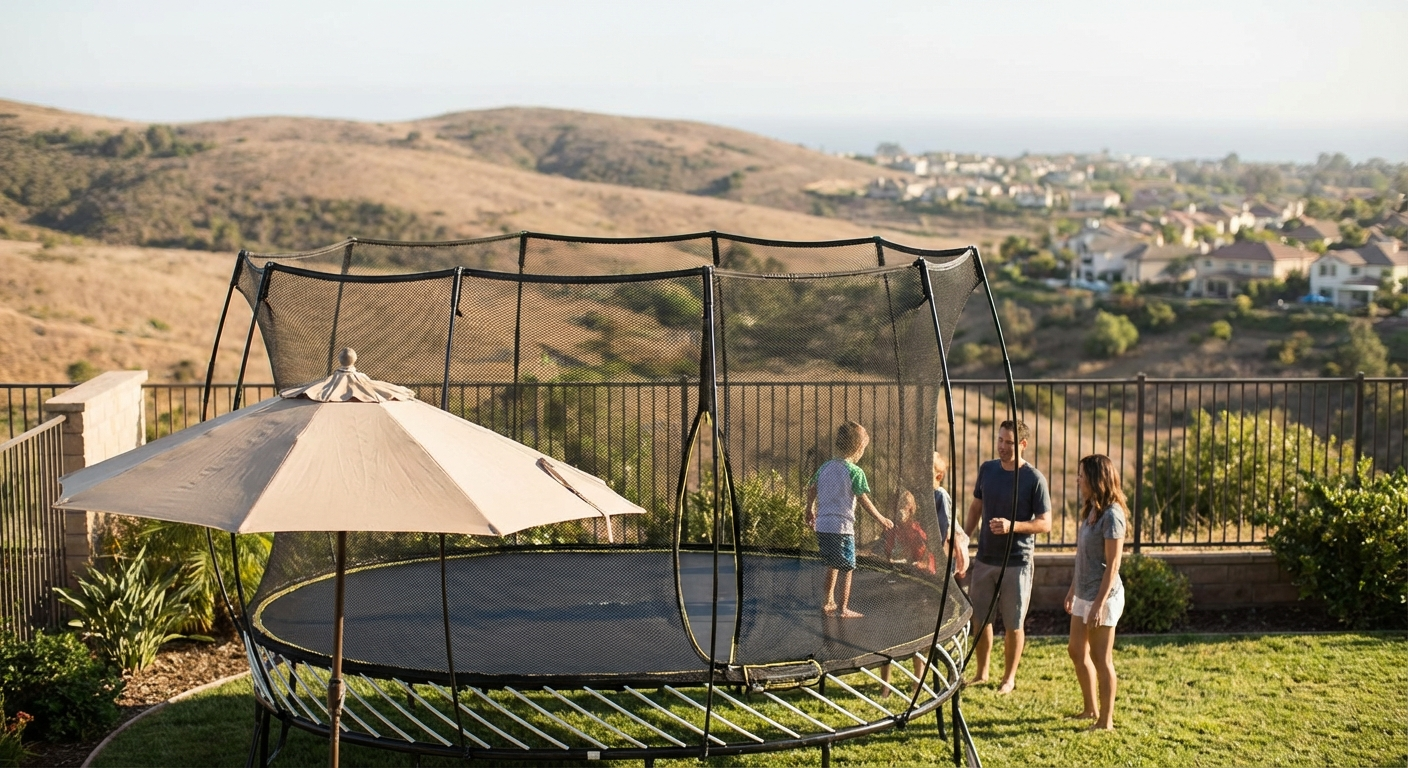
- Safety Nets: Does your trampoline have a safety enclosure net? Most reputable manufacturers include these now, and insurers definitely prefer them.
- Padding: Is the spring area covered with thick, well-maintained padding?
- Fencing: Do you have a fence around your yard? Does it have a self-latching gate? This helps prevent unauthorized use, which is a big deal under California’s “attractive nuisance” doctrine.
- Supervision: Do you always supervise children when they’re on the trampoline? While difficult to prove, insurers want to know you’re responsible.
- Age Limits/Rules: Do you enforce rules like “one jumper at a time” or age restrictions?
The more safety measures you have in place, the better your chances of securing coverage, and sometimes, at a better rate. Insurers appreciate policyholders who actively try to reduce risk.
The Cost Factor in California
Many people assume umbrella insurance is incredibly expensive. And it’s true, premiums have jumped across California, much like home insurance premiums spiked 40% between 2022 and 2024 for some areas due to wildfire risks and reconstruction costs. But for the amount of protection it offers, an umbrella policy is often surprisingly affordable. We’re talking hundreds of dollars a year, not thousands, for millions in coverage.
That’s not the whole story. The cost will vary based on your location — whether you’re in the wildfire-prone hills above the Valley, or a more suburban tract in Orange County — and your overall risk profile, including things like your driving record and, yes, that trampoline. California’s Prop 103 also plays a role, as it requires state approval for rate changes, which can sometimes slow down how quickly insurers can adjust to rising risks. While the FAIR Plan offers fire coverage for high-risk homes, it doesn’t touch liability. So, you’re on your own there.
Making the Right Choice for Your Family
Choosing the right umbrella policy, especially with a trampoline in the picture, isn’t a “set it and forget it” task. It requires careful consideration and a good understanding of your specific risks. You don’t want to find out you’re underinsured after a serious accident.
Here’s where it gets interesting. You need someone who understands the nuances of California insurance law, the different appetites of various carriers, and the specific challenges homeowners face in places like Los Angeles.
Don’t guess. Talk to an expert. Karl Susman of Los Angeles Umbrella Insurance has been helping Californians with their insurance needs for years. He understands the local market and can help you find the right coverage for your unique situation. His CA License #OB75129 means he’s a licensed professional who knows his stuff.
Ready to explore your options and get peace of mind? Get an umbrella insurance quote today.
Frequently Asked Questions About Trampolines and Umbrella Coverage
Can I get homeowners insurance in California if I have a trampoline?
The short answer is yes. The real answer is more complicated. Some insurers will flat-out refuse, while others will offer a policy but exclude any trampoline-related liability. Finding a carrier that provides full coverage for a trampoline under your homeowners policy is rare, which is why an umbrella policy becomes so important.
Does an umbrella policy automatically cover my trampoline?
Not always. While an umbrella policy extends your liability, the underlying exclusions from your homeowners policy can sometimes carry over. You need to confirm with your agent that your specific umbrella policy will cover trampoline incidents. It often depends on the specific insurer and the safety measures you have in place.
What happens if someone gets hurt on my trampoline and I don’t have enough insurance?
If your liability coverage is insufficient, you could be personally responsible for all damages, including medical bills, lost wages, and pain and suffering. This could mean draining your savings, selling assets, or even having your future wages garnished to satisfy a judgment. It’s a risk no homeowner should take.
Is it better to remove my trampoline than to get special insurance?
That’s a personal decision. Removing it definitely eliminates the liability risk. But if your family enjoys it, securing proper insurance allows you to keep it with peace of mind. The cost of an umbrella policy is often far less than the enjoyment your family gets from the trampoline, balanced against the potential financial ruin of an uninsured accident.
Ready to Protect Your California Home?
Understanding your risks, especially with something like a trampoline, is the first step toward true peace of mind. Don’t leave your family’s financial future to chance. Speak with a knowledgeable agent who can guide you through the specifics of California insurance and help you build a robust protection plan.
Take the next step towards securing your assets. Get an umbrella insurance quote now.
This article is for informational purposes only and does not constitute financial advice.