The Chen Family’s Everyday Risk: More Cars, More Questions
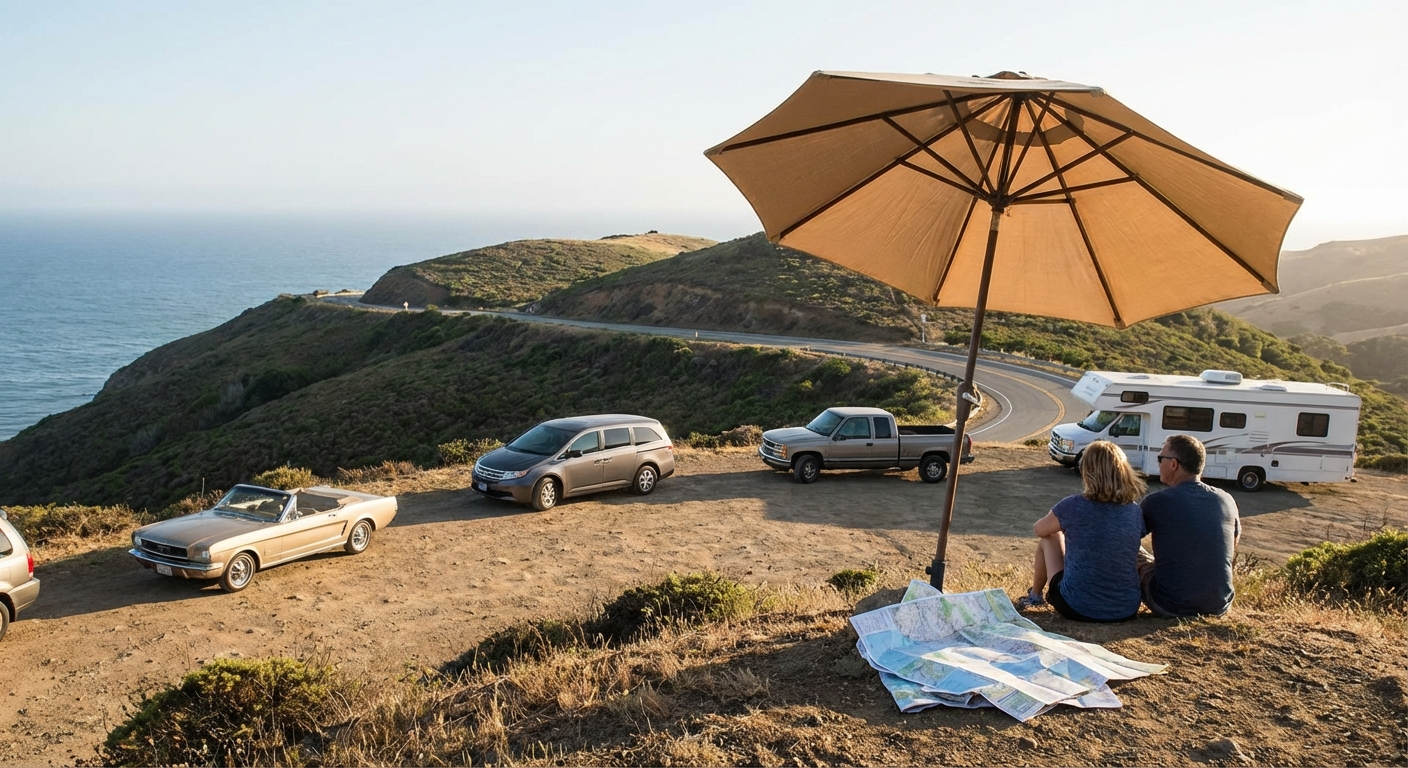
Picture the Chen family in Irvine. David and Maria, both busy professionals, juggle two kids, a demanding schedule, and a garage that tells a story. There’s David’s reliable sedan for his commute down the 5. Maria has her SUV, perfect for shuttling their daughter, Emily, to soccer practice in Laguna Hills and their son, Leo, to robotics club in Tustin. Emily, just got her driver’s license. She’s now behind the wheel of an older but dependable car, navigating the bustling streets of Orange County. Oh, and tucked away for weekend adventures? Their RV, often heading to Big Bear or the Central Coast.
Sound familiar? For many California families, this multi-vehicle reality is just normal life. But here’s the thing: every car, truck, or RV represents a point of potential liability. Every time one of those vehicles pulls out of the driveway, the Chens are exposed to risks that could easily shatter their financial security. A fender bender on the 405, a distracted moment in a parking lot, or something far more serious – it happens. And in a state like California, where property values are sky-high and lawsuits are a common response to accidents, even a minor incident can quickly balloon into a life-altering financial burden. This is where an umbrella insurance policy steps in, providing a much-needed layer of protection for all those wheels.
What Even *Is* Umbrella Insurance, Anyway?
Honestly, the name “umbrella” really does sum it up. Think of it as a giant, protective canopy that sits *above* your existing auto and home insurance policies. Your regular car insurance policy has liability limits, right? Maybe it’s $250,000 per person and $500,000 per accident. If you cause a crash, and the damages – medical bills, lost wages, property damage to someone’s brand-new Mercedes – exceed that $500,000, your primary auto policy stops paying.
Which brings up something most people miss. Where does that extra money come from? It comes straight from your savings. From your home equity. From your investments. An umbrella policy kicks in at that exact moment. It picks up where your standard policies leave off, providing millions of dollars in additional liability coverage. It’s not just for car accidents, either. It covers things like libel, slander, or even if someone gets hurt on your property. But let’s focus on the road, because that’s where most people first feel the pinch.

Why Multiple Vehicles Change the Game
One car carries one set of risks. Two cars? That’s two sets. Add a teen driver to the mix, and suddenly your risk profile jumps considerably. Teenagers, bless their hearts, are statistically more likely to be involved in accidents. Their insurance rates reflect it. But it’s not just about the number of cars or drivers. It’s about the *types* of vehicles, too.
David’s sedan might cause less damage in a crash than Maria’s heavier SUV. Emily’s older car, while safe, might not have the latest safety tech that could reduce impact. And that RV? Imagine accidentally jackknifing that on the I-5 and hitting multiple cars, or worse, a building. The potential for large-scale damage and severe injuries goes up dramatically with larger vehicles. Every additional vehicle you own – whether it’s a motorcycle, a classic car, or a recreational vehicle – means another potential point of liability, another scenario where your primary insurance might not be enough. An umbrella policy, however, generally covers all the vehicles listed on your underlying auto policy, providing a single, overarching layer of protection for your entire fleet.
The California Factor: Why Your Liability Here Hits Different
California isn’t just a place; it’s a whole different ballgame when it comes to insurance liability. For most California homeowners and drivers, the stakes are incredibly high. Our cost of living is steep, which means everything from medical procedures to property repairs costs more. If you total someone’s car, and they need extensive physical therapy after, those bills add up fast. If that car hits a house in Malibu or a commercial building in downtown San Diego, the property damage alone could easily hit six or seven figures.
Honestly, we live in a litigious state. People are quick to sue, and juries in California are known for awarding large sums in personal injury cases. Think about a relatively minor accident causing someone whiplash, leading to lost work time and pain and suffering. Even without major visible damage, that claim can quickly exceed standard auto liability limits.
But wait — there’s another angle. What if *you’re* not at fault, but the other driver is uninsured or underinsured? While your auto policy might have uninsured motorist coverage, if you’re deemed even partially responsible, or if the other party’s insurer decides to go after you for subrogation, you could still face significant exposure. All those shiny cars in your driveway? They become potential targets.
What Happens When Your Primary Auto Policy Isn’t Enough?
Let’s go back to the Chens. Imagine Emily, fresh out of her driving test, makes a mistake. Maybe she misjudges a turn in a busy shopping center in Santa Ana and hits another car, seriously injuring the driver and passengers. The other car is totaled. Medical bills, lost wages for the injured, pain and suffering, legal fees – the total claim rockets to $1.5 million.
The Chens have good auto insurance, with $500,000 in liability coverage. That means their auto policy will pay out its maximum $500,000. But that still leaves a cool $1 million gap. Without an umbrella policy, that remaining million would need to come from *somewhere*. Their savings account? Their retirement fund? The equity in their beautiful Irvine home? Their son Leo’s college fund? It’s not just hypothetical; this scenario plays out in California courtrooms every single day. That’s the cold reality of insufficient liability coverage.
Bundling Your Umbrella: One Policy for All Your Wheels (and More)
The good news is you don’t need a separate umbrella policy for each car you own. That would be wildly expensive and totally impractical. Instead, a single umbrella policy is typically written to cover *you* and your household. It extends liability protection over all the underlying policies you hold – usually your primary auto policies and your homeowner’s insurance. So, David’s sedan, Maria’s SUV, Emily’s first car, and even their RV would all fall under the same umbrella.
For most insurers, you’ll need to carry certain minimum liability limits on your primary policies for an umbrella policy to kick in. Often, that means something like $250,000 per person and $500,000 per accident for auto liability. These underlying policies act as the first line of defense. Once they’re exhausted, the umbrella takes over. This structure makes it incredibly efficient and surprisingly affordable to get millions in extra protection. Many people find they can get $1 million or more in umbrella coverage for just a few hundred dollars a year, especially when bundled with their existing policies.
The Hidden Costs of Not Having Enough
The most obvious cost of not having enough liability insurance is the direct financial hit – writing a check from your personal assets. But that’s not the whole story. There are the legal fees, which can quickly climb into the tens of thousands even if you eventually win. There’s the sheer stress and emotional toll of a lawsuit hanging over your head for months, or even years. Imagine the Chens trying to focus on work or family life with a $1 million judgment looming.
That’s not the whole story. Your future earnings can be garnished. Your credit score takes a beating. Dreams of a comfortable retirement or helping your kids with a down payment on a first home can evaporate. It’s not just about what you own *today*; it’s about what you *could* own tomorrow.
Finding the Right Fit in California’s Shifting Market
The insurance landscape in California has definitely seen some turbulence lately. With wildfires, rising repair costs, and various regulatory changes, some insurers have pulled back, and premiums have jumped across the board – sometimes 40% between 2022 and 2024 for certain lines of coverage. It can feel like finding the right coverage at a fair price is harder than ever.
This is exactly why working with an independent agent makes so much sense. Someone like Karl Susman at Los Angeles Umbrella Insurance knows the California market inside and out. They’re not beholden to just one insurance company. Instead, they can shop around, compare policies from multiple carriers, and find the best fit for your specific needs – whether you’re in Ventura County, the Inland Empire, or the Valley. They understand the nuances of covering multiple vehicles, young drivers, and the particular risks that come with living in California. Karl Susman, CA License #OB75129, has seen it all, and his team can help you navigate these often-confusing waters. You can reach them at (877) 411-5200.
Ready to see what an umbrella policy could do for your peace of mind? Get a personalized quote today.
Common Questions About Umbrella Insurance and Multiple Cars
Does my umbrella policy cover a motorcycle?
Generally, yes! If your motorcycle is listed on your primary auto insurance policy, and that policy meets the underlying liability limits required by your umbrella insurer, then your umbrella policy would extend coverage to your motorcycle. It’s always best to confirm with your agent, but typically, all vehicles you own and are primarily insured are covered.
What if I lend my car to a friend? Is that covered by my umbrella?
Most umbrella policies follow the primary auto insurance principle: if you give permission for someone to drive your car, your primary auto insurance will likely cover them. Since the umbrella policy sits on top of your primary, it would then extend its protection as well. However, this usually applies to occasional use, not if you lend your car for an extended period or to someone who lives in your household and isn’t listed on your policy.
Do I need separate umbrella policies for each car?
Absolutely not. One of the main benefits of an umbrella policy is that it provides a single, overarching layer of liability protection for your entire household. This includes all the vehicles you own, whether it’s two cars, an RV, or a collection of motorcycles, as long as they are properly insured with underlying primary policies.
Can my RV or boat be covered under the same umbrella?
Yes, typically! If you have a separate insurance policy for your RV or boat (which you should, given their potential for liability), and that policy meets the required underlying liability limits, your umbrella policy will usually extend coverage to those recreational vehicles as well. This is excellent news for anyone who enjoys California’s beautiful outdoors in their RV or on the water.
How much umbrella coverage do I really need?
This is a question without a single answer, but a good rule of thumb is to consider your total net worth and then add a buffer for future earnings. If you own a home, have significant savings, or a high-earning career, you should consider higher limits like $2 million, $5 million, or even more. In California, where lawsuit awards can be substantial, it’s often wise to err on the side of more protection.
Don’t Wait for the Rain to Start Pouring
Living in California with multiple vehicles is a joy for many. It offers freedom, flexibility, and adventure. But it also comes with a unique set of risks that demand smart planning. Don’t leave your financial future exposed to the unexpected. The Chen family sleeps a little sounder knowing they have that extra layer of protection.
Start your quote for umbrella coverage now.
This article is for informational purposes only and does not constitute financial advice.